“I like the word decadent, all shimmering with purple and gold.”
—Paul Verlaine
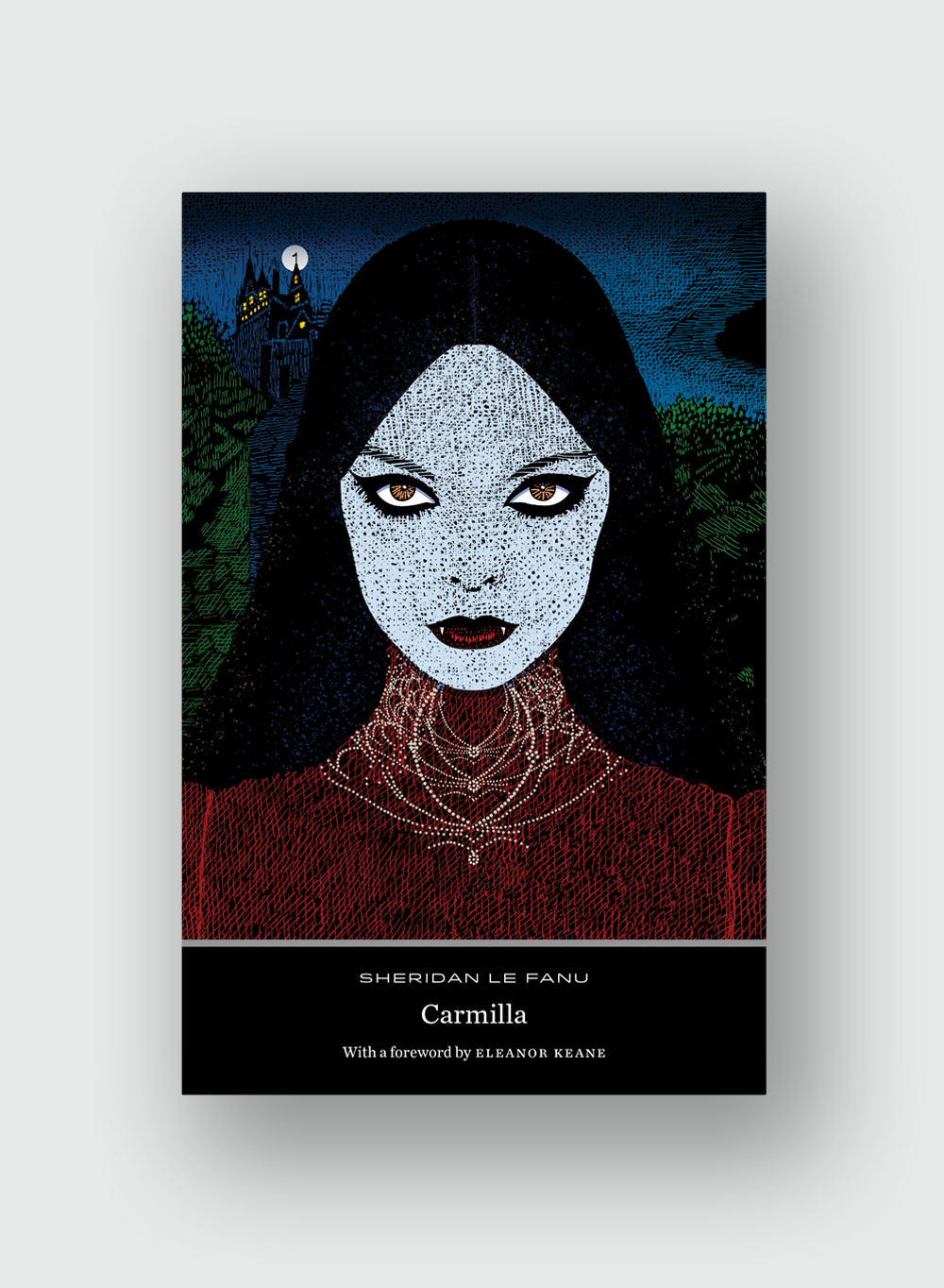
By Sheridan Le Fanu
Foreword by Eleanor Keane
“Her hot lips traveled along my cheek in kisses; and she would whisper, almost in sobs, ‘You are mine, you shall be mine, you and I are one forever.’”
Young and innocent Laura leads a sheltered life in a castle in Austria with her father and two governesses. One moonlit night, they witness the carriage accident of beautiful Carmilla, whose glamour and intensity fill Laura with both fascination and dread. As Carmilla recuperates at the castle and their friendship deepens, a mysterious malady plagues the young women of their town. Will Laura realize her peril too late?
In this sapphic horror story, Sheridan Le Fanu presents elements that have become classic vampire tropes: a remote castle, a charismatic aristocrat, a nubile female victim, and strange happenings in a European village. Fans of Mary Shelley’s Frankenstein and Bram Stoker’s Dracula will enjoy this gothic tale that continues to inspire writers of dark fiction.
This new edition includes:
A foreword of literary critique by Dr. Eleanor Keane, whose research interests focus on gender, decadence, and sexuality within the late nineteenth century.
A biography of Sheridan Le Fanu.
Buy on:
Buy on Amazon
Buy on Bookshop.org
Buy on IngramSpark

By Francesca Penchant
“A haunting tale of addiction, trauma, and survival that captures the dim glow of lost stardom.”
—Kirkus Reviews
Glamorous May Deville is headed for destruction as she drinks away the 1950s at her husband’s bar. Memories of her vaudeville days, triggered by the death of the stage mother who made her a child star, just make her drink harder. But when a beautiful stranger convinces her husband, Ace, to dream of the big time, May must sober up if she wants to survive. Maybe in Heaven is the strange, decadent portrait of a lost woman fighting against a bitter little world—in which gender is a performance and love is a con.
Fans of Charles Jackson’s The Lost Weekend, Gypsy Rose Lee’s Gypsy, and Megan Abbott’s Queenpin will enjoy the style of this fever-dream thriller and its cast of ruthless females. At last call, Maybe in Heaven is an intoxicating love letter to noir, and to art itself.
AVAILABLE:
Buy on Amazon
Buy on Bookshop.org
Buy on IngramSpark
Buy on Barnes & Noble
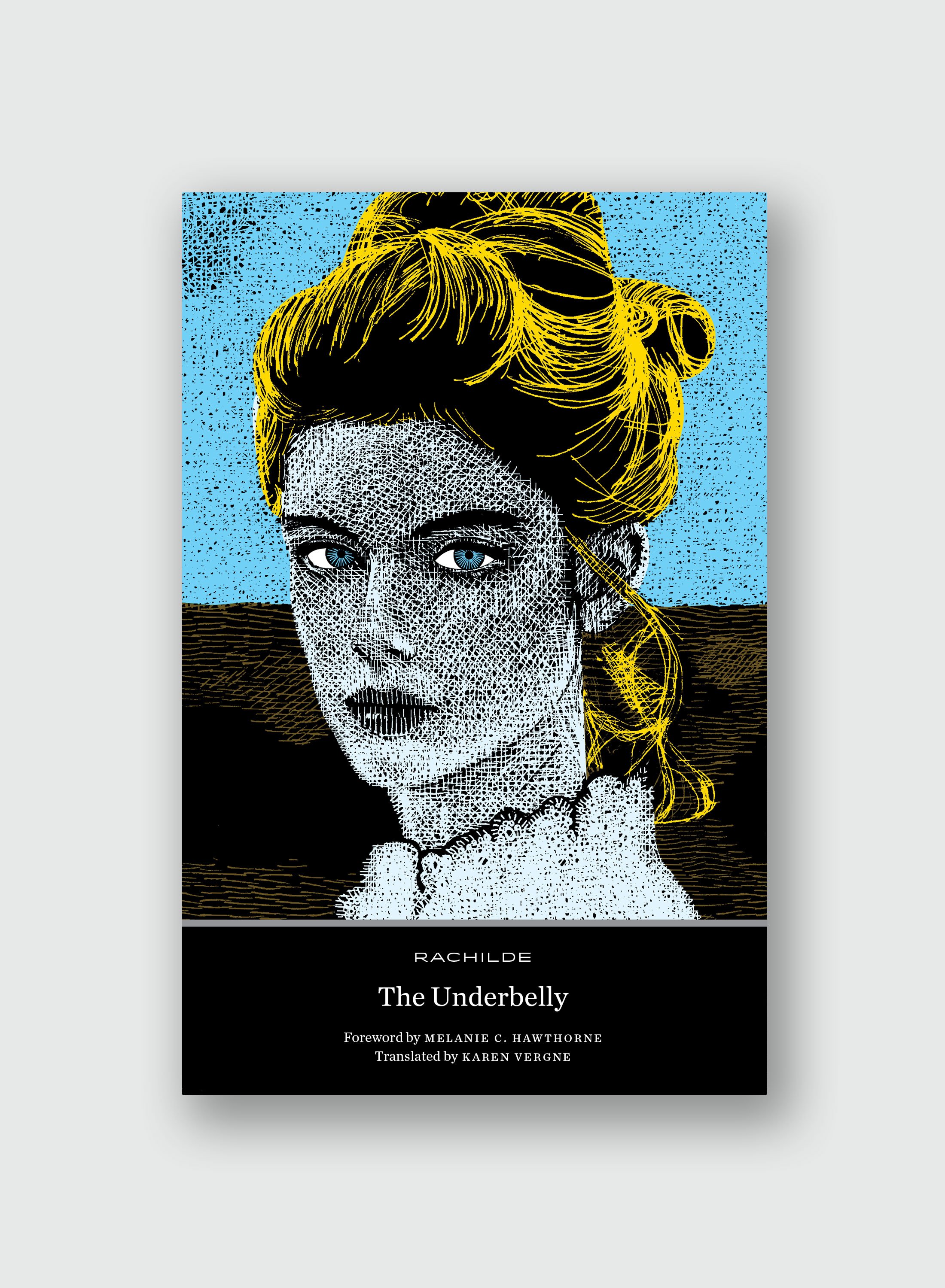
By Rachilde
“An innocent but curious heroine who discovers the extent of human depravity is the core of much of Rachilde’s fiction, and the present novel is no exception.”
—Melanie C. Hawthorne
Amid the rose gardens of her father’s farm, beautiful Marguerite Davenel is weary of her supposedly charmed life. When she encounters charismatic Fulbert, an anarchist who despises the bourgeois world that she represents, he upends the very foundations of her existence. As their complicated attraction deepens, the appearance of a woman from Fulbert’s past blurs the boundaries between good and evil, forcing Marguerite to decide where she stands. First published in 1904 by Rachilde, a fiercely independent author who explores provocative sexuality and characters, the novel is translated here into English for the first time.
The Underbelly illustrates Rachilde’s enduring relevance—a decadent tale in which the propriety of the countryside hides a dark underside.
AVAILABLE:
Buy on Amazon
Buy on Bookshop.org
Buy on IngramSpark
Buy on Lulu
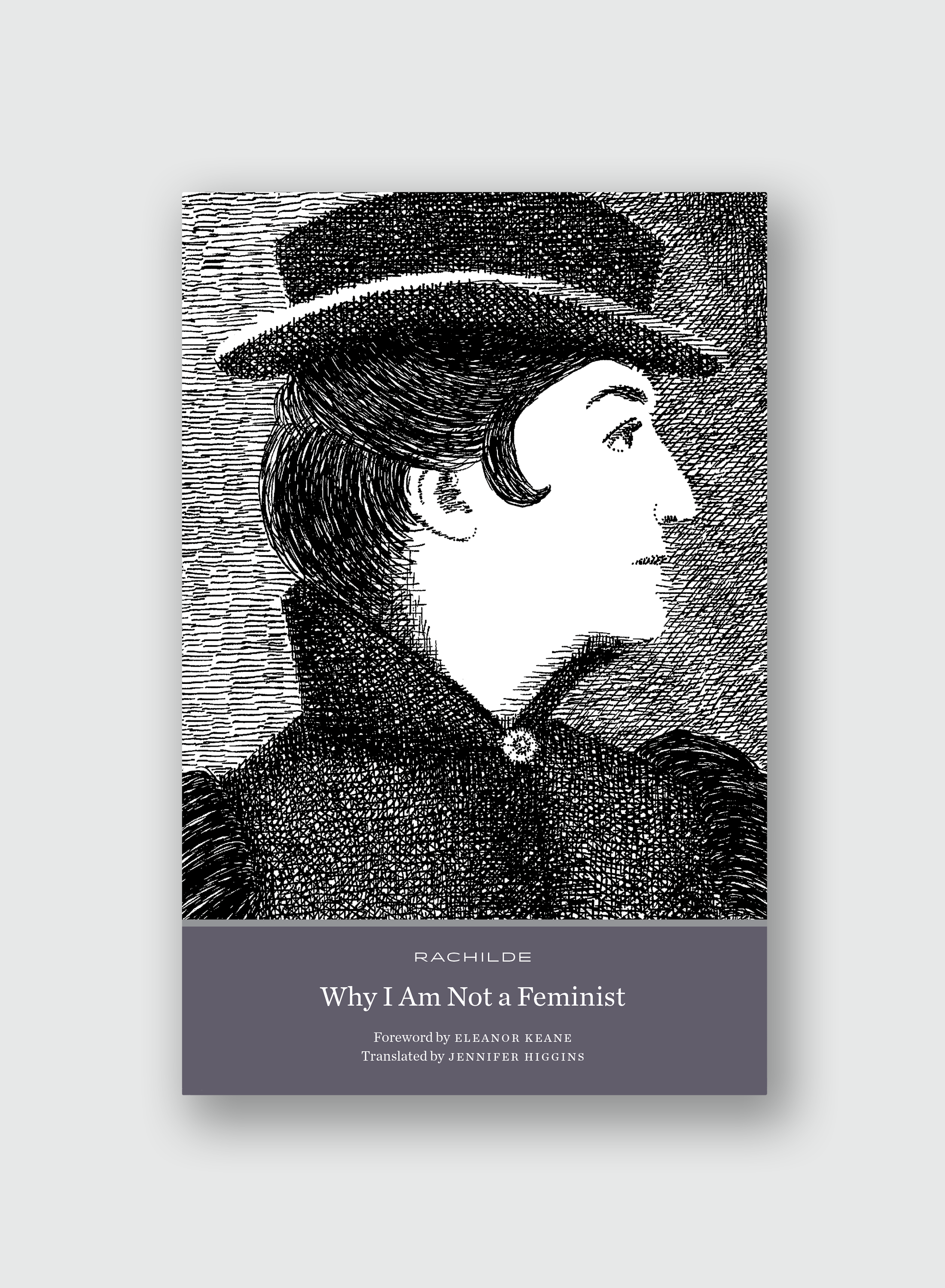
By Rachilde
In 1884, the French novelist Rachilde scandalized Paris with Monsieur Vénus, her story of a woman who seduces a florist and makes him her “mistress,” in a reversal of gender roles.
And yet, decades later, Rachilde wrote this provocatively titled essay Why I Am Not a Feminist (1928). In it, she voices her opposition to the burgeoning feminist movement, while at the same time identifying the era’s sexism. She skewers cocktail-guzzling flappers in their mimicry of masculine vices, while delving into the fraught family experiences—with her distant mother and soft-hearted grandmother—that led to her distrust of other women. So, despite Rachilde’s good literary citizenship as a salonnière—and friendships with other authors, such as Oscar Wilde, Jean Lorrain, and Alfred Jarry—this essay raises questions about her assumed allegiances.
Translated here into English for the first time by Jennifer Higgins, Why I Am Not a Feminist is a central document for Rachilde scholars, a key to understanding Rachilde’s beliefs and work. An individualist to the last, unconcerned with public opinion, Rachilde’s outspokenness still inspires today.
AVAILABLE:
Buy on Amazon
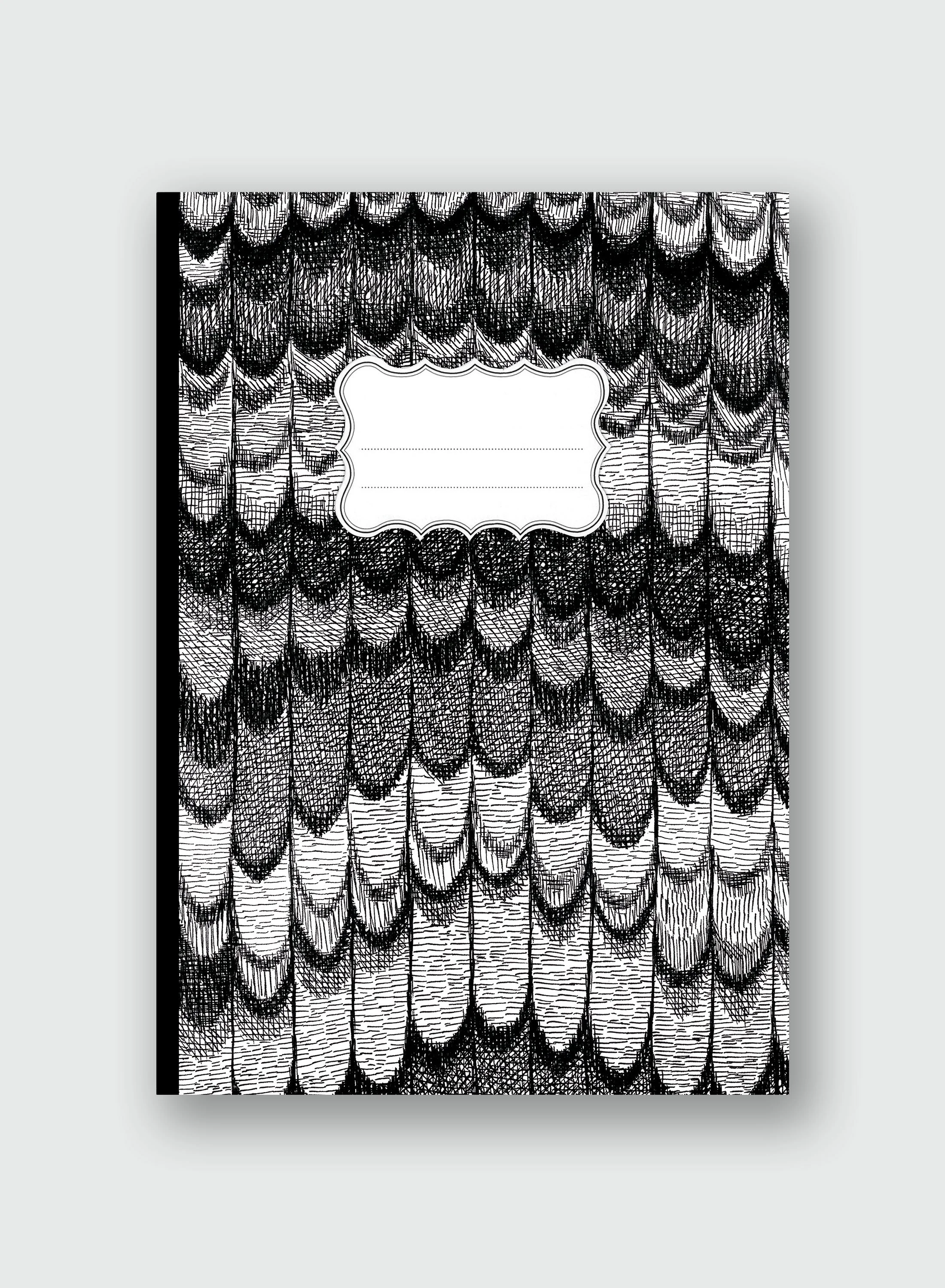
Our Nonpareil Composition Notebook features an orginal illustration inspired by classic European marbled paper on the cover, saddle-stapled binding, and 100 ruled pages.
Perfect binding
Paper cover
Bright white text paper interior
College ruled
7" W × 10" H
AVAILABLE:
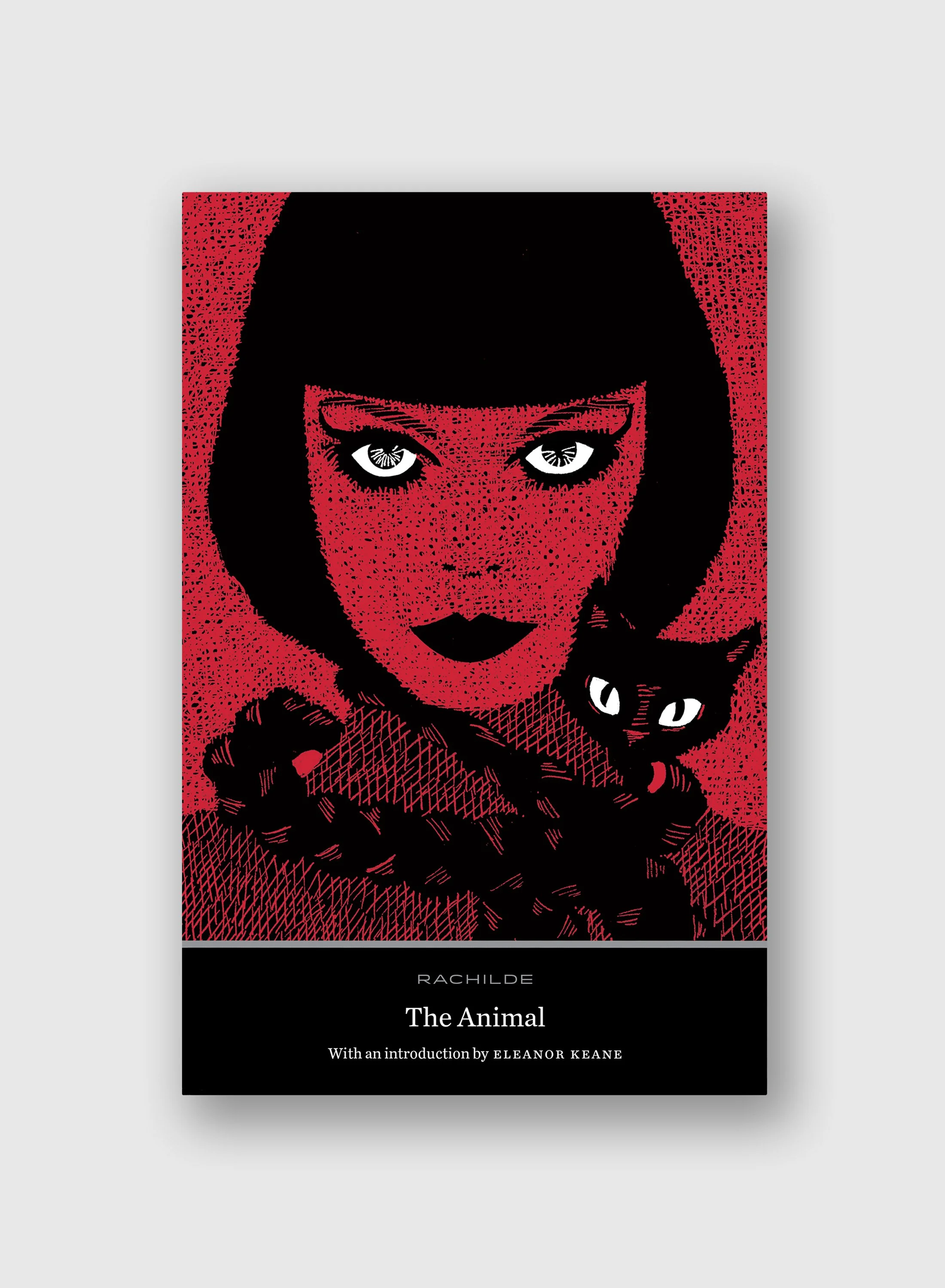
By Rachilde
Foreword by Eleanor Keane
Translated by Lauren Fischer
“An unapologetically offbeat and insightful adventure of a young Frenchwoman.”
—Kirkus Reviews
From Rachilde, Queen of the Decadents, comes a novel set in Belle Époque Paris about a passionate young woman who lives for love. Laure Lordès escapes her hometown amid scandal, following her lover to the city to live like a pet in a gilded cage. But when a feral kitten touches Laure’s heart and she begins to change, she learns that being true to herself and her young charge is harder than she ever imagined. First published in 1893 by Rachilde—a fiercely independent author who explored provocative sexuality and characters—The Animal is arguably her finest work. Translated here into English for the first time, the story unfolds into a stunning conclusion.
AVAILABLE NOW:
Buy on Amazon
Buy on Bookshop.org
Buy on IngramSpark
Buy on Barnes & Noble
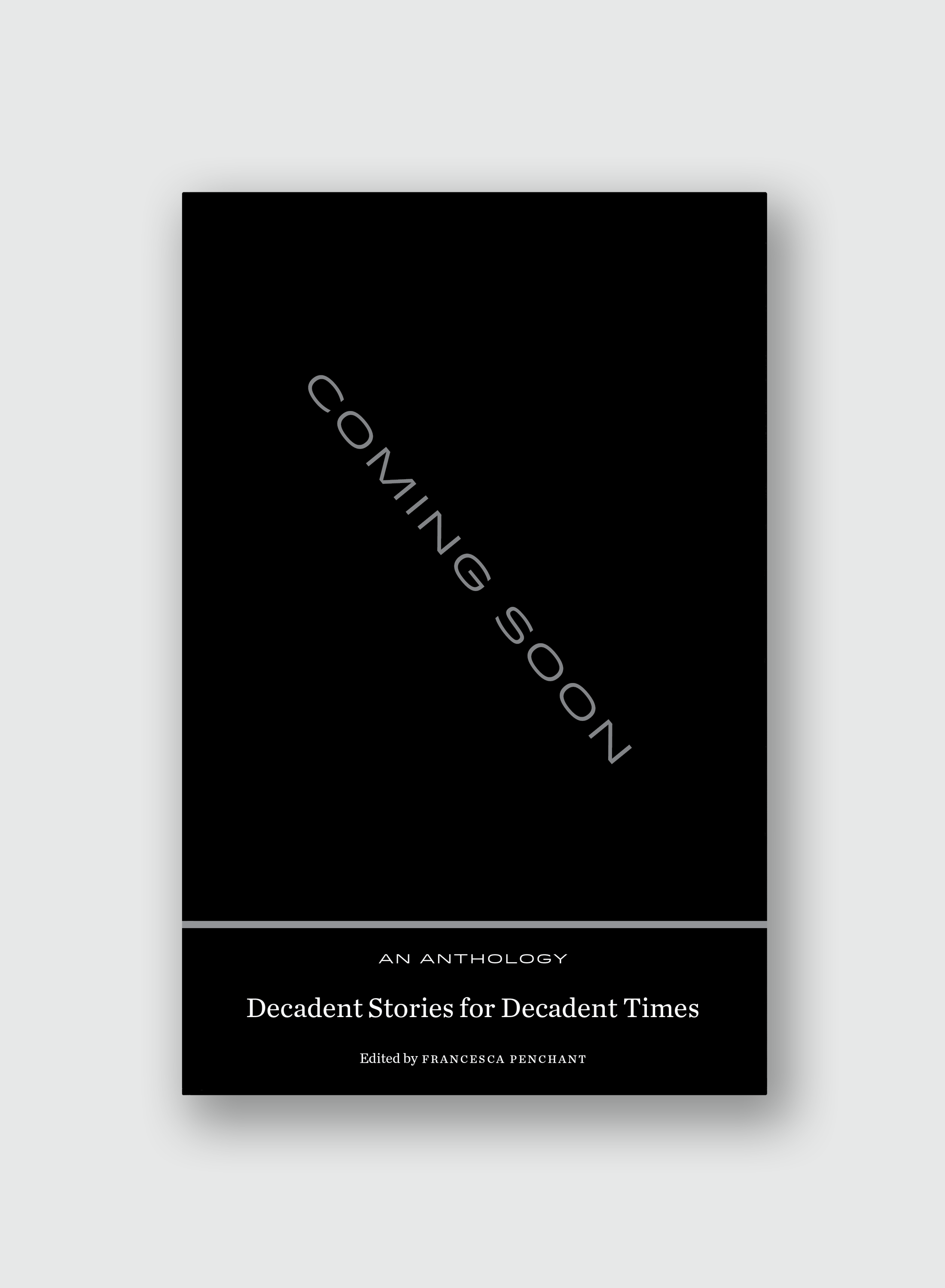
Rome AD 39. Paris 1884. London 1890. Washington, DC 2026.
In different eras in history, forces coalesce to create decadent times. Those times have returned. Inspired by France’s nineteenth-century decadent literary movement, this writing contest is looking for the best decadent writing now.
Rachilde & Co. Books is seeking short stories for its anthology, Decadent Stories for Decadent Times. R&Co. welcomes stories with a good dash of artificiality, transgression, and Schopenhauerian pessimism in the veins of Barbey d’Aurevilly, Huysmans, Lorrain, Mirbeau, Maupassant, Rachilde, Villiers de l’isle Adam, and Vivien. Finalists of the contest will be read by special guest-judge Dr. Eleanor Keane.
To enter, see R&Co.’s Duosuma.com page.
DUE DATE
Submissions are open from June 15, 2026 to August 15, 2026, 11:59 p.m. Pacific Time.
PRIZES
15 finalists will be published in the anthology. 1 contest winner receives $300 (USD) + publication in the anthology + 1 complimentary paperback copy of the published anthology. 14 runners up will receive publication in the anthology + 1 complimentary paperback copy of the anthology.
FEE
$20 for each submission
INCLUDE WITH YOUR STORY
1) A biography of yourself (50 words or fewer);
2) Your email address;
3) Your mailing address where you want the book sent.
WORD COUNT
Submissions should be between 1,000 to 7,500 words (we are not seeking poetry, flash fiction, scripts, novels, or novellas).
GENRE
Decadent fiction, as you interpret it. See Rachilde & Co.’s article “The Decadent Story” and our other articles on Substack for more information about decadent fiction.
LANGUAGE
Story must be in English.
FORMAT
Submit your story as a Microsoft Word .doc or .docx file.
FORMATTING
Submit your story in 12-point Times New Roman font, double spaced, with 1-inch margins. Documents should be paginated and have the name of the story as the header.
ANONYMITY
Exclude the author’s name from the document; neither the file name, nor the headers, nor the beginning of the document should contain the author’s name. If the document contains the author’s name, it will be rejected.
PUBLISHING HISTORY
Submitted stories may be previously published either online or in print, as long as the writer holds the copyright.
COPYRIGHT
Upon publication in the anthology, writers will retain the copyrights to their stories.
AI
No generative-AI submissions will be accepted. Stories may be tested for AI use. Generative-AI writing will be rejected.
COPYEDITING
By submitting a story, you agree to having your manuscript copyedited for typos and for style adherence to the Chicago Manual of Style.
PUBLICATION
The anthology will be published by R&Co. within 1 year of the contest’s close. Employees of Rachilde & Co. are disqualified from winning the contest.
SUBMISSION MAX
You may enter as many times as you wish. Each submission is $20.
SIMULTANEOUS SUBMISSIONS
You may submit a story that is being reviewed by another publisher.
HATE SPEECH
While decadent literature can be transgressive, no offensive or violent discourse targeting a group or an individual based on inherent characteristics (such as race, religion, or gender) will be tolerated.
ABOUT THE JUDGES
Guest Judge: Dr. Eleanor Keane is a member of the Decadence Research Centre at Goldsmiths, University of London, and the British Association of Decadence Studies (BADS) Executive Committee. Her research interests focus on the decadent fairy tale, literary decadence and the visual arts, and expressions of gender, decadence, and sexuality within the late nineteenth century. She holds a PhD in English and an MA in Literary Studies from Goldsmiths, and an MSc from City University, London.
Panelist: Francesca Penchant is a dark fiction book editor and publisher who teaches editing at the University of Washington in Seattle. Discovering Joris-Karl Huysmans's Là-Bas (1891) in a used bookshop in San Francisco in the 1990s consummated decadent literature's hold over her. She founded Rachilde & Co. Books, an independent press for which she designs books of decadent LGBTQ+ authors and themes from the nineteenth-century and beyond.
CLMP GUIDELINES
The Community of Literary Magazines and Presses (CLMP) believes that ethical contests serve our shared goal: to connect writers and readers by publishing exceptional writing. Intent to act ethically, clarity of guidelines, and transparency of process form the foundation of an ethical contest. To that end, we agree
to conduct our contests as ethically as possible and to address any unethical behavior on the part of our readers, judges, or editors;
to provide clear and specific contest guidelines—defining conflict of interest for all parties involved; and
to make the mechanics of our selection process available to the public.
This Code recognizes that different contest models produce different results, but that each model can be run ethically. We have adopted this Code to reinforce our integrity and dedication as a publishing community and to ensure that our contests contribute to a vibrant literary heritage.
To enter, submit stories on our Duosuma.com page.
COMING SOON:
Buy on Amazon
Buy on Bookshop.org
Buy on IngramSpark
Buy on Barnes & Noble
Contact Us
Fill out some info and we will be in touch shortly.